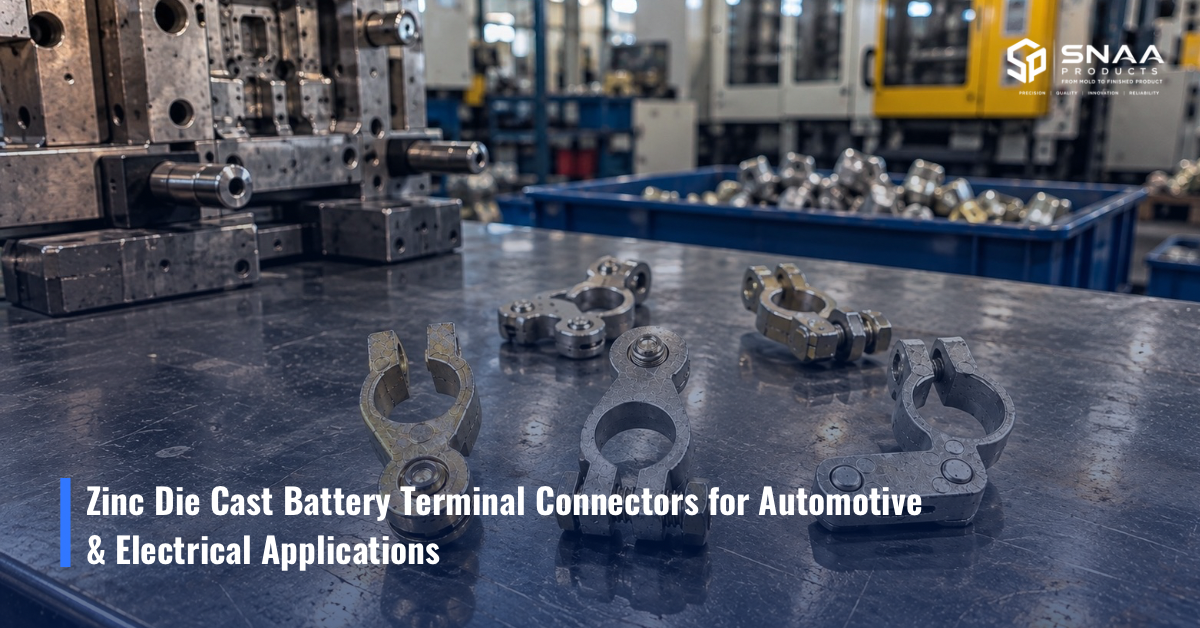
Zinc Die Cast Battery Terminal Connectors are used in applications where a component needs dimensional accuracy, mechanical strength, reliable assembly and consistent production quality. Battery terminal components are required to maintain proper fit with the corresponding battery and electrical assembly, making manufacturing accuracy an important consideration.
For automotive and electrical manufacturers, choosing the right supplier is therefore about more than simply casting the component. Tooling, zinc alloy selection, machining, surface finishing and quality inspection all contribute to the final part.
What Are Zinc Die Cast Battery Terminal Connectors?
Zinc Die Cast Battery Terminal Connectors are precision-manufactured zinc components produced using pressure die casting. Molten zinc alloy is injected into a mould under pressure, allowing manufacturers to create detailed and repeatable component geometries.
Depending on the design, a connector may include mounting sections, holes, slots, threaded features or other interfaces required for assembly.
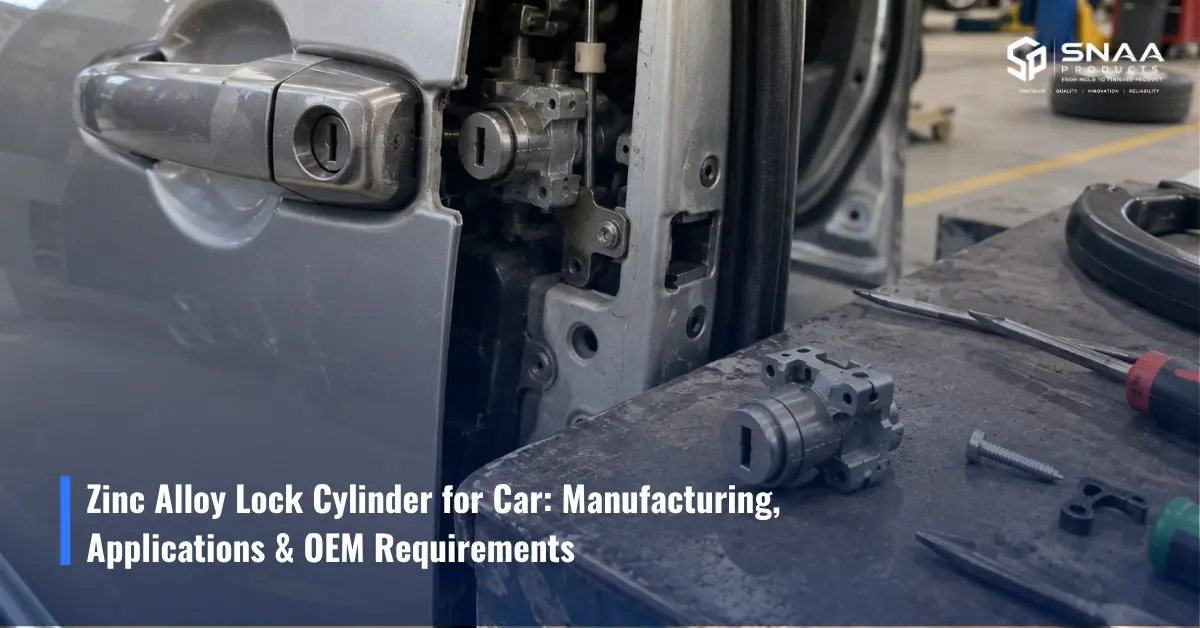
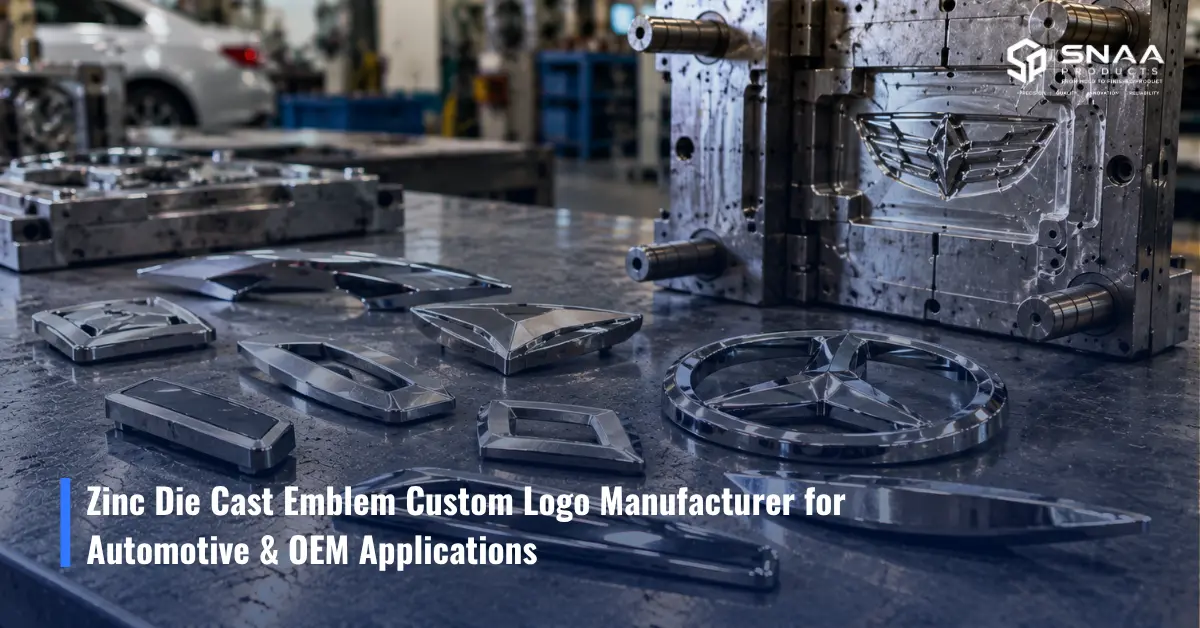
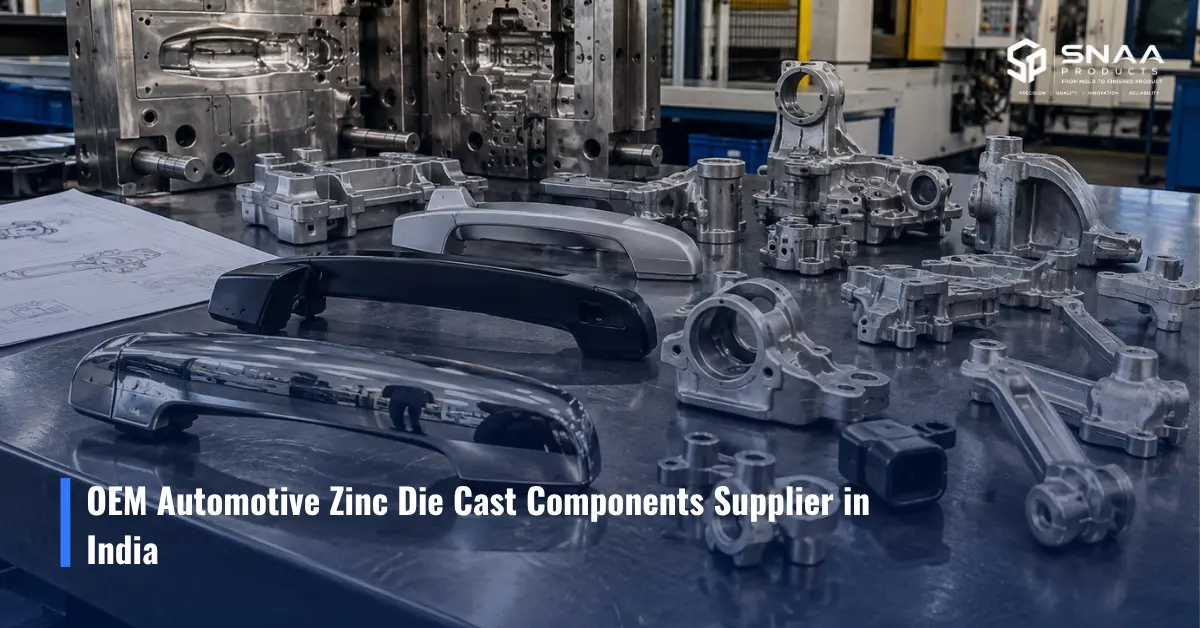
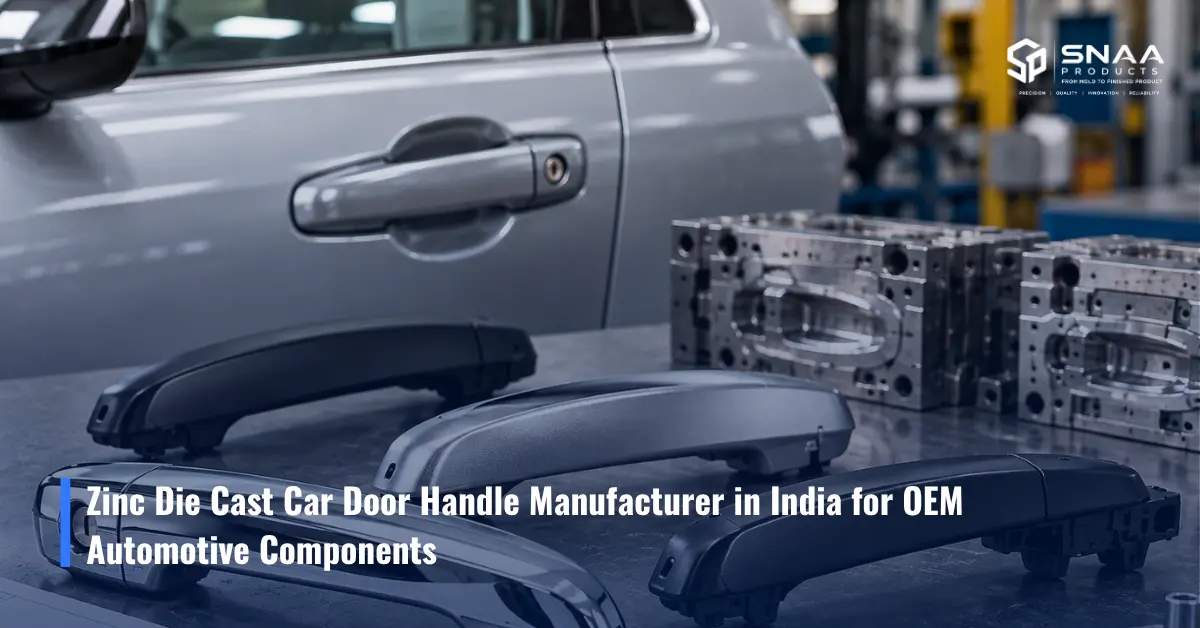
SNAA Products displays Zinc Die Cast Battery Terminal Connectors as part of its automotive zinc die casting portfolio, alongside components such as door handles, mirror brackets, carburettor components, seat belt buckles and other automotive parts.
Why Use Zinc Die Casting for Battery Terminal Components?
Zinc die casting can be suitable for components that require complex shapes and repeatable production.
Key manufacturing benefits include:
- Consistent component dimensions
- Detailed component geometry
- Good surface quality
- Repeatable production
- High-volume manufacturing capability
- Compatibility with multiple finishing processes
- Integration of machining and secondary operations
For manufacturers sourcing Zinc Battery Terminal Connectors, these characteristics can be particularly relevant when components need to be produced consistently across multiple production batches.
Tooling Is Critical for Battery Terminal Production
The quality of the mould directly influences the final die cast component. Before tooling begins, the component drawing or CAD model can be reviewed for features such as wall sections, parting lines, draft requirements, cores and machining requirements.
SNAA Products has an in-house tool room and mould manufacturing capability, giving it control over tooling development and maintenance. The company has been manufacturing zinc die cast components since 1996, with more than 30 years of experience.
For an OEM requiring Zinc Die Cast Battery Terminal Connectors, having tooling and casting under the same manufacturing setup can also simplify communication between engineering and production teams.
Zamak Alloys for Zinc Die Cast Components
SNAA Products primarily manufactures zinc die cast components using Zamak 3 and Zamak 5 alloys. The appropriate material can be selected according to the component’s application and technical requirements.
For battery-related components, material selection should be considered alongside the component geometry, assembly requirements, operating environment and required surface finish.
The final material specification should always be confirmed according to the customer’s engineering requirements.
Machining and Secondary Operations
Casting may not be the final manufacturing stage for Zinc Battery Terminal Connectors. Depending on the drawing, additional operations may be required to achieve the required assembly dimensions.
SNAA Products provides post-production operations including:
- Drilling
- Tapping
- Outer and inner thread cutting
- Pitch control machining
- Turning
- Deburring
- Polishing
- Buffing
These operations can help prepare Zinc Die Cast Battery Terminal Connectors for subsequent assembly or integration into an automotive or electrical product.
Surface Finishing Options
The required finish depends on the application and customer’s specification. SNAA Products provides multiple finishing options for zinc die cast components, including:
- Chrome electroplating
- Nickel plating
- PVD gold
- Powder coating
- Zinc plating
- Shot blasting
- Sand blasting
- Vibratory media finishing
The company states that its finishing capabilities are available for components according to customer requirements.
For Zinc Battery Terminal Connectors, the surface treatment should be specified according to the intended application, environmental conditions and assembly requirements.
Quality Control for Zinc Battery Components
Consistency is particularly important when producing Zinc Die Cast Battery Terminal Connectors for OEM or repeat manufacturing programmes.
SNAA Products states that quality checks are carried out at multiple stages. Incoming zinc alloy composition is checked, dimensions are inspected during production, components are checked before finishing and final inspection is carried out before dispatch.
This multi-stage approach helps identify manufacturing variations before finished components reach the customer.
SNAA Products for Custom Zinc Die Casting
SNAA Products has been manufacturing zinc die cast components since 1996 from its facility in Bawana, Delhi NCR. Its manufacturing capabilities cover tooling, precision zinc die casting, machining, post-production operations and multiple surface finishing options.
The company manufactures custom components according to customer drawings, CAD files, samples and technical specifications. Its website also identifies Zinc Die Cast Battery Terminal Connectors within its automotive component portfolio.
This makes the process suitable for manufacturers requiring components developed around their own product design rather than an off-the-shelf part.
What Should You Send for a Quotation?
When sourcing Zinc Die Cast Battery Terminal Connectors, manufacturers should ideally provide:
- 2D engineering drawing
- 3D CAD model
- Component sample, if available
- Required zinc alloy
- Surface finish specification
- Expected production quantity
- Machining requirements
- Dimensional and quality requirements
SNAA Products states that quotations can be prepared more accurately when the product drawing, required alloy, surface finish and approximate order quantity are provided.
Conclusion
Zinc Die Cast Battery Terminal Connectors require controlled tooling, suitable zinc alloy selection, accurate die casting, secondary machining and appropriate finishing. For automotive and electrical manufacturers, the ability to manage these stages under one manufacturing setup can simplify sourcing and production coordination.
With manufacturing experience since 1996, an in-house tool room, Zamak 3 and Zamak 5 capability, multiple post-production operations and surface finishing options, SNAA Products manufactures custom zinc die cast components according to customer specifications.
Frequently Asked Questions
1. What are Zinc Die Cast Battery Terminal Connectors?
They are zinc die cast components designed for battery-related automotive or electrical applications and manufactured according to the required component geometry and specifications.
2. Which zinc alloys does SNAA Products use?
SNAA Products primarily uses Zamak 3 and Zamak 5 for its zinc die cast components.
3. Can custom Zinc Battery Terminal Connectors be manufactured?
Yes. SNAA Products manufactures custom zinc components according to customer drawings, CAD files, samples and technical specifications.
4. Can machining be provided after die casting?
Yes. Drilling, tapping, threading, turning, deburring, polishing and other post-production operations are available according to component requirements.
5. Since when has SNAA Products manufactured zinc die cast components?
SNAA Products has been manufacturing zinc die cast components since 1996 and has more than 30 years of manufacturing experience.