Choosing an automotive grade zinc die casting service in 2026 requires more than comparing quotations. Automotive manufacturers need components that meet engineering drawings, maintain dimensional consistency and support reliable assembly across production batches.
From door handles and lock cylinder housings to automotive emblems, brackets and other precision parts, component quality depends on alloy selection, mould design, casting conditions, machining and inspection. A suitable manufacturing partner for automotive grade zinc diecasting services should understand these requirements before production begins.
SNAA Products has manufactured zinc die cast components since 1996 from its facility in Bawana, Delhi NCR. Its capabilities include tool and mould development, zinc die casting, secondary machining and surface finishing.
What Is an Automotive Grade Zinc Die Casting Service?
An automotive grade zinc die casting service manufactures zinc alloy components according to approved engineering drawings, material specifications, dimensional requirements and surface finish standards.
During pressure die casting, molten zinc alloy is injected into a steel mould under pressure. Once the metal solidifies, the component is removed, trimmed and processed further where required.
This process can be suitable for automotive components that require:
- Detailed shapes and complex geometries
- Consistent dimensions across production batches
- Smooth surfaces for plating or coating
- Integrated mounting points and fixing features
- Repeatable manufacturing for OEM assembly
The suitability of zinc die casting depends on the part’s geometry, operating conditions, mechanical requirements and production volume. Material selection should always be based on the component’s technical specifications.
Why Do Automotive Manufacturers Choose Zinc Die Casting?
Zinc die casting offers several advantages for components that require intricate details, repeatable dimensions and good surface quality.
1. Complex Component Designs
Zinc alloys can reproduce fine design features, ribs, bosses, lettering and other detailed geometries. This makes the process suitable for selected automotive housings, handles, lock components and decorative parts.
2. Consistent Dimensions
Appropriately designed tooling and controlled production conditions help maintain repeatable component dimensions. This is particularly important when parts must fit with other components during assembly.
3. Surface Finishing Options
Zinc die cast components can be polished, plated or coated according to their application. The desired finish should be specified during design and tooling development because visible surfaces and coating requirements can influence the manufacturing process.
4. Efficient Repeat Production
Once tooling has been developed and the casting process stabilised, die casting can support recurring production. Actual cycle times and unit costs depend on component complexity, tooling design, finishing and production volume.
7 Checks Before Selecting an Automotive Grade Zinc Die Casting Service
1. Review the Engineering Drawing
Before manufacturing the mould, the supplier should review the component drawing or CAD model. This helps identify critical dimensions, wall thickness, draft angles, parting lines and areas requiring secondary machining.
Confirm which dimensions affect assembly, which surfaces are visible and which features require specific tolerances.
An early design-for-manufacturing review can help identify potential production difficulties before tooling investment begins.
2. Confirm the Zinc Alloy Grade
Zamak 3 and Zamak 5 are commonly used zinc die casting alloys, but they are not automatically interchangeable for every application.
The appropriate grade depends on the component’s required mechanical properties, geometry, casting characteristics and operating environment.
A capable automotive grade zinc die casting service should discuss the proposed alloy against the customer’s engineering requirements rather than selecting material based only on price.
SNAA Products manufactures zinc die cast components using Zamak 3 and Zamak 5 according to application requirements.
3. Evaluate Tooling and Mould Development
Tooling influences component geometry, surface appearance, production repeatability and overall manufacturing costs.
Before approving a project, discuss:
- Mould design and development responsibilities
- Sample production and approval procedures
- Tooling ownership and maintenance
- Arrangements for design modifications
- Mould refurbishment and future production support
SNAA Products has an in-house tool room for mould development, maintenance and refurbishment. This helps coordinate tooling requirements with the casting process.
4. Check Casting Process Controls
Production consistency depends on appropriate control of material condition, casting parameters and mould condition.
Ask the supplier how production settings are monitored, how casting defects are identified and how process changes are managed.
These procedures help identify variations before they affect a larger batch. Inspection frequency and process controls should reflect the component’s criticality and the customer’s requirements.
5. Verify Dimensional and Visual Quality
An automotive grade zinc die casting service should work against documented acceptance criteria rather than relying only on a general promise of good quality.
Depending on the component, inspection may include:
| Inspection area | What to verify |
|---|---|
| Dimensions | Critical measurements against the approved drawing |
| Casting surface | Visible cracks, flash and surface irregularities |
| Mounting features | Hole positions and assembly interfaces |
| Machined areas | Thread quality and specified dimensions |
| Surface finish | Coating condition and agreed appearance |
The supplier and buyer should agree on inspection methods and acceptance criteria before production approval. Additional tests should be specified where the application requires them.
6. Confirm Machining and Surface Finishing
Casting may need to be followed by secondary operations before the component is ready for assembly.
These operations can include drilling, tapping, thread cutting, turning and deburring. Depending on the application, finishing may include chrome plating, nickel plating, powder coating, PVD coating, polishing or other suitable treatments.
Discuss finishing specifications, inspection requirements and corrosion testing where applicable. Not every component requires every finishing process, so the final specification should reflect its intended use.
7. Assess Production Readiness and Supplier Experience
The right supplier should be able to explain the process from design review and tooling through sample approval, production, inspection and dispatch.
Before placing an order, confirm the supplier’s ability to work from engineering drawings, CAD files or approved samples. Establish expected lead times, packaging requirements, quality documentation and arrangements for repeat orders.
Automotive programmes may require particular quality management systems, traceability or production approval procedures. Confirm these requirements for your specific project rather than assuming they are included automatically.
How to Request a Quotation for Automotive Components
When contacting an automotive grade zinc die casting service, provide sufficient technical information for the supplier to assess manufacturing feasibility and prepare a meaningful quotation.
Share the following details:
- Component drawing or CAD file
- Required alloy grade, if already specified
- Estimated order quantity and annual demand
- Critical dimensions and tolerances
- Required surface finish
- Machining and assembly requirements
- Inspection and documentation requirements
Ask shortlisted suppliers to quote against the same drawing revision and scope of work. Compare tooling costs, unit pricing, finishing, inspection, packaging and lead times together instead of choosing solely on the lowest component price.
Why Consider SNAA Products?
SNAA Products has manufactured zinc die cast components since 1996 and operates from Bawana, Delhi NCR.
Its manufacturing capabilities include in-house tool and mould development, zinc die casting, secondary machining, surface finishing and quality inspection.
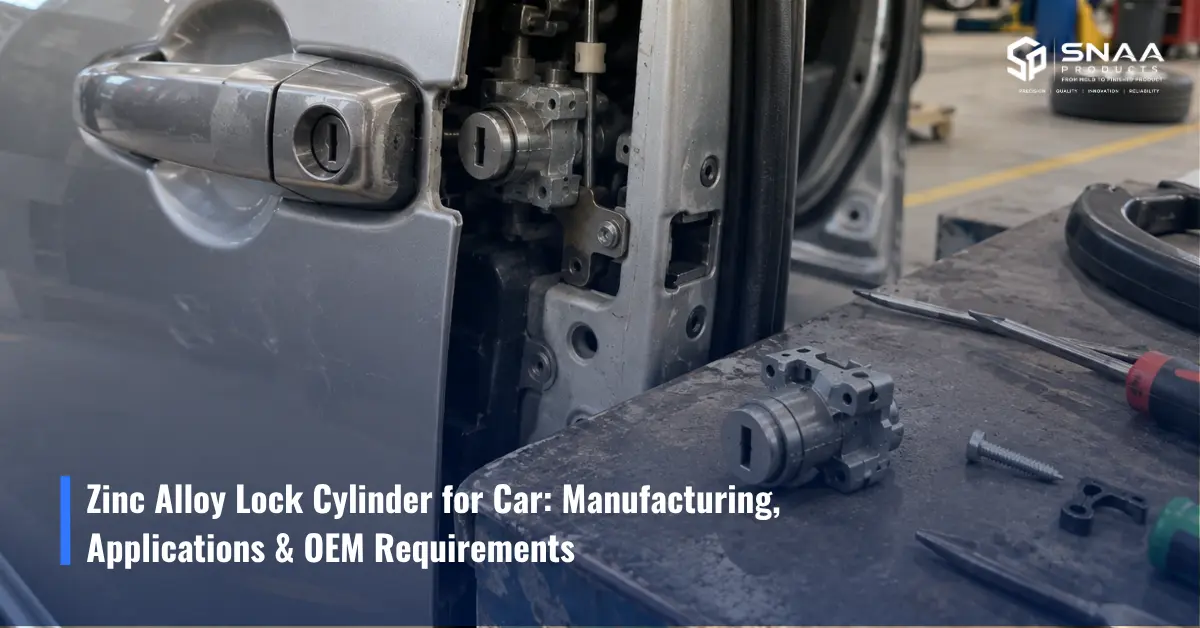
The company’s automotive component range includes door handles, lock cylinder housings, emblems, brackets and battery terminal connectors. Custom components can be discussed using customer drawings, CAD files, samples and technical specifications.
For OEM buyers evaluating an automotive grade zinc die casting service, SNAA Products offers a manufacturing setup that brings tooling and supporting production operations together.
Visit the SNAA Products automotive components page to explore its applications, or visit the official website to discuss your requirements.
Frequently Asked Questions
What is an automotive grade zinc die casting service?
It manufactures zinc alloy components for automotive applications according to agreed engineering drawings, material specifications, dimensional requirements and quality criteria.
Which zinc alloys are used for automotive components?
Zamak 3 and Zamak 5 are commonly used options. The appropriate grade depends on the component’s design and required properties.
What information is required for a quotation?
Provide the component drawing or CAD file, expected quantity, alloy requirements, critical tolerances, surface finish and any required inspection documentation.
Can zinc die cast components be machined and plated?
Yes. Depending on the design, components can undergo drilling, tapping, threading, turning and deburring, followed by specified finishing processes such as chrome or nickel plating.
How should buyers evaluate a supplier’s quality?
Review tooling capabilities, production controls, inspection procedures, sample approval processes and the supplier’s ability to meet documented specifications. Request relevant quality records for the project.
Conclusion
Selecting an automotive grade zinc die casting service in 2026 requires careful evaluation of engineering design, alloy selection, tooling, casting controls, machining and inspection. Addressing these factors before production can help buyers reduce avoidable manufacturing risks and improve consistency across repeat orders.
SNAA Products combines zinc die casting with tooling, machining and finishing capabilities, backed by manufacturing experience dating back to 1996. Share your component drawing, expected quantity and finishing requirements to discuss your project.