Modern automotive manufacturing demands components that are precise, repeatable, lightweight, finish-ready and economical at scale. While aluminium, steel and engineered plastics dominate many vehicle applications, zinc remains highly valuable for smaller and medium-sized components where complex geometry, dimensional consistency and surface finish are critical.
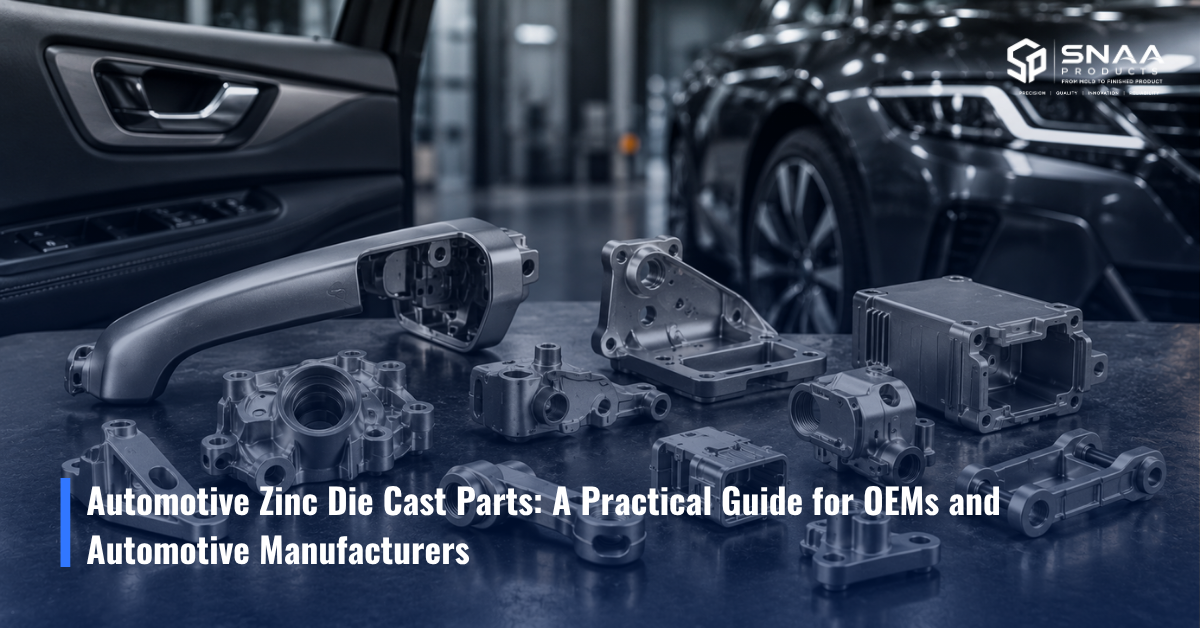
Automotive zinc die cast parts are increasingly relevant for handles, brackets, housings, levers, locks, fittings and other precision components that need consistent production across large volumes.
Check SNAA Product’s Automotive Zinc Die Cast Parts
What Are Automotive Zinc Die Cast Parts?
Automotive zinc die cast parts are components manufactured by injecting molten zinc alloy under pressure into a reusable steel die. The process can produce detailed geometries with good dimensional repeatability and smooth as-cast surfaces.
According to the North American Die Casting Association (NADCA), zinc offers good castability, ductility, impact strength and plating compatibility, while die casting is widely used in automotive applications.
For OEMs, the real advantage is not simply zinc itself. It is the combination of:
- Complex part geometry
- High production repeatability
- Good dimensional stability
- Long tooling life
- Excellent finishing compatibility
- Reduced secondary machining
- Efficient high-volume manufacturing
That combination makes automotive zinc die cast parts particularly useful where the component has to perform reliably while also meeting appearance and assembly requirements.
Why Zinc Works for Automotive Components
The strongest argument for automotive zinc die cast parts is their overall manufacturing economics.
Zinc alloys can fill detailed die cavities efficiently, allowing designers to incorporate ribs, bosses, mounting features and other details directly into the casting. NADCA specifically identifies complex shapes, tight tolerances, smooth or textured surfaces, finishing compatibility and long tooling life as key benefits of zinc die casting.
For automotive manufacturers, this can mean fewer individual components and fewer secondary operations.
Automotive zinc die cast parts can be particularly suitable when a program requires:
- Consistent dimensions across production batches
- Compact but complex geometries
- Integrated mounting points
- Functional threads or machined interfaces
- Decorative or protective finishes
- Repeat production at high volumes
Where Are Automotive Zinc Die Cast Parts Used?
Not every automotive component should be manufactured from zinc. The material makes the most sense when its specific properties match the application’s requirements.
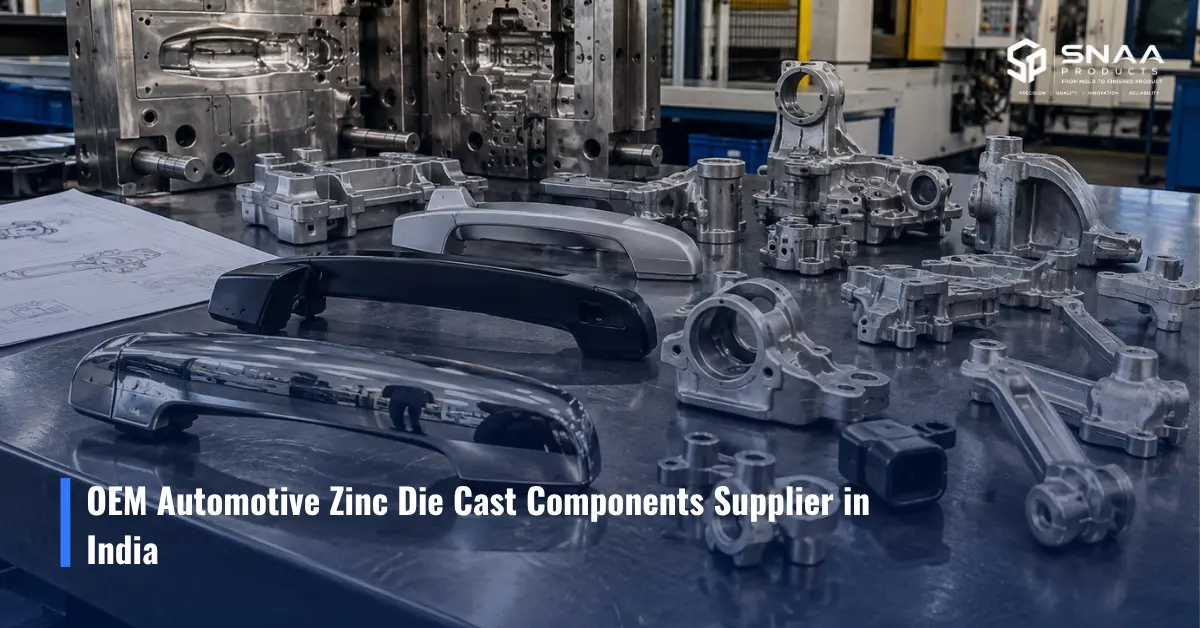
Common automotive zinc die cast parts include:
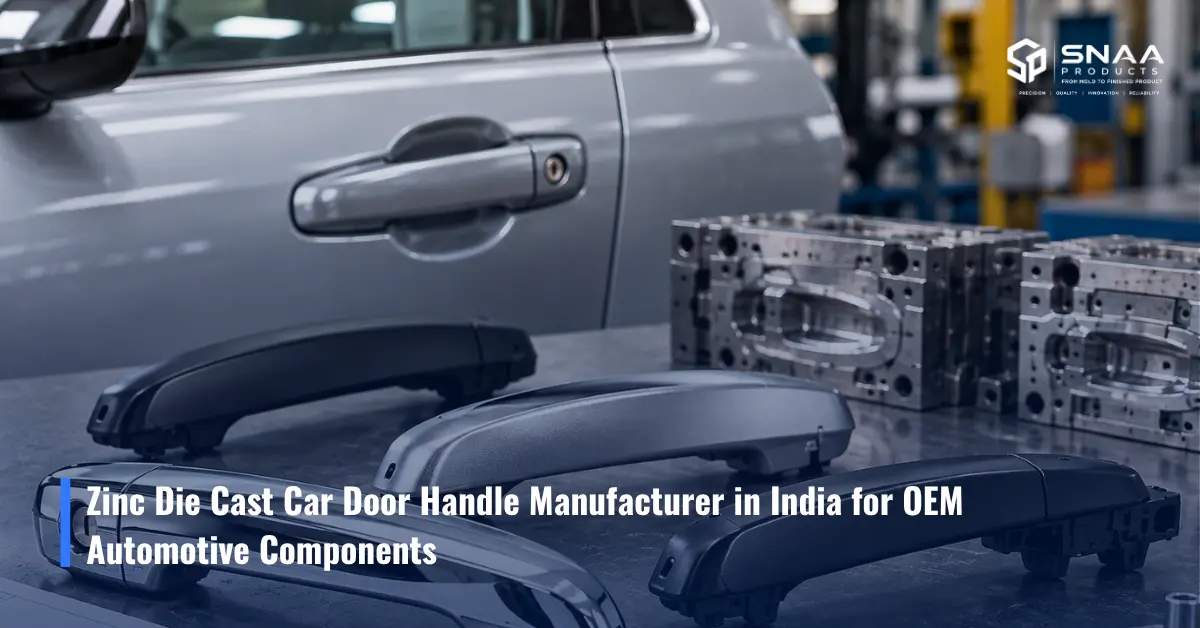
1. Door Handles and Levers
Door handles and operating levers combine functional requirements with strong aesthetic expectations. Zinc can reproduce detailed contours and provide an excellent base for chrome, nickel and other decorative finishes.
2. Brackets and Mounting Components
Small automotive brackets can benefit from integrated ribs, bosses and mounting points. Instead of manufacturing several pieces separately, a properly designed casting can consolidate multiple features into one component.
3. Housings and Covers
Compact housings often require controlled dimensions, mounting features and good surface quality. Zinc is useful for selected housings where these requirements are more important than extreme lightweighting.
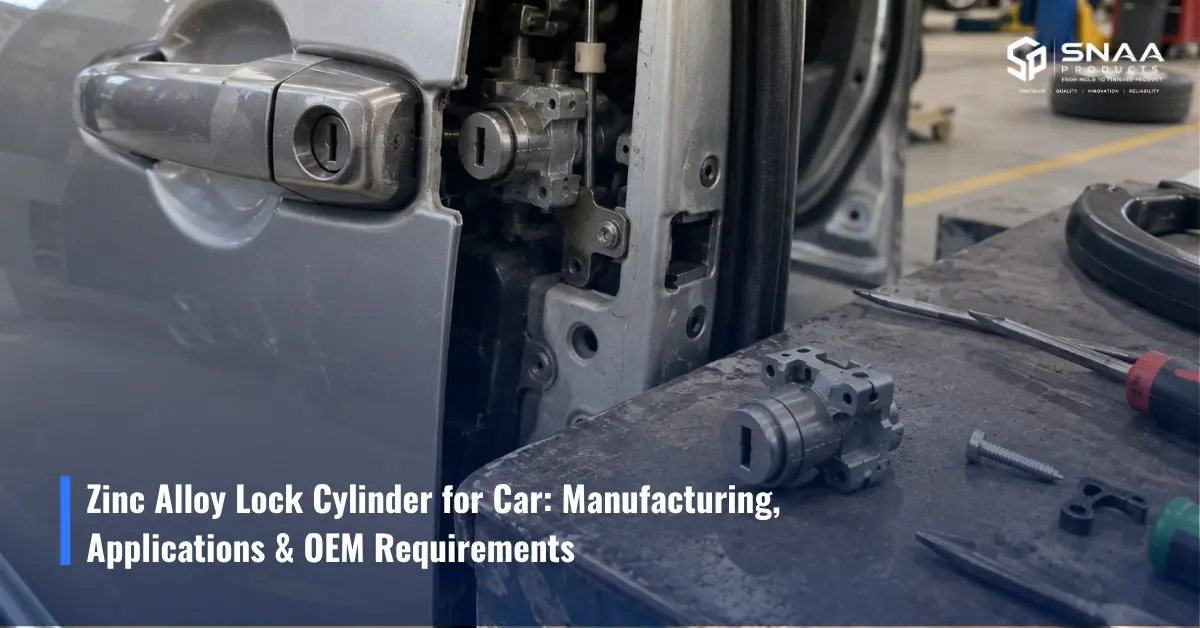
4. Lock and Latch Components
Automotive locking systems contain several interacting components. Zinc can be considered for selected housings, levers and functional hardware where repeatable geometry and mechanical performance are required.
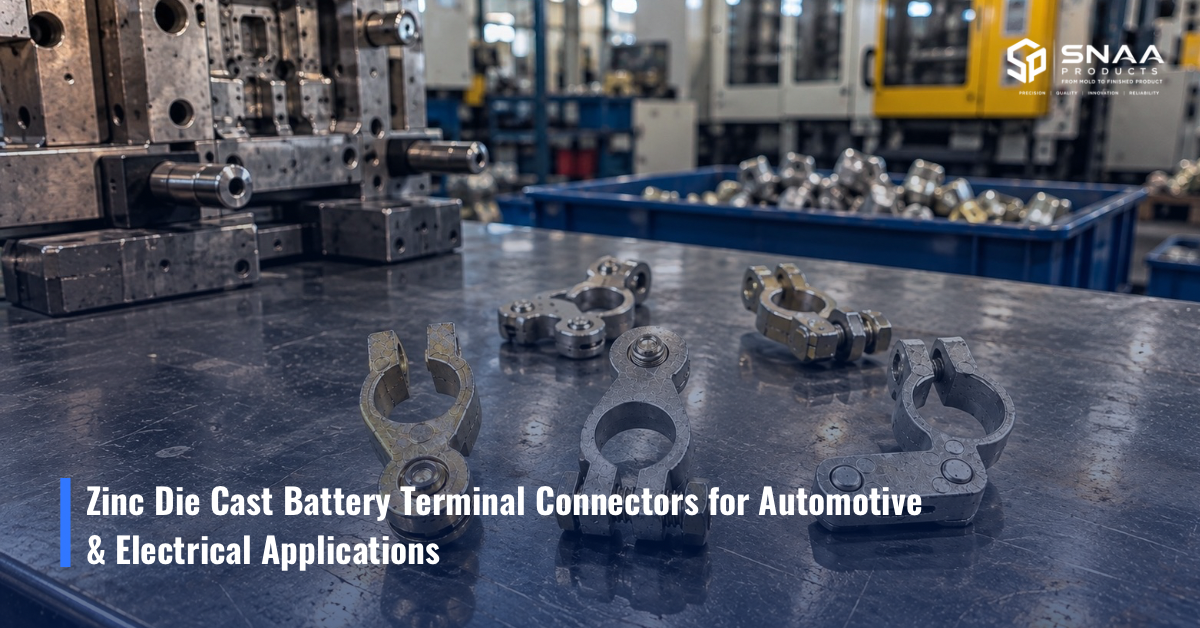
5. Automotive Electrical Housings
Modern vehicles contain an increasing number of electrical and electronic systems. Selected connector bodies, protective housings and mounting components can be produced as automotive zinc die cast parts when dimensional control, shielding or mechanical protection is important.
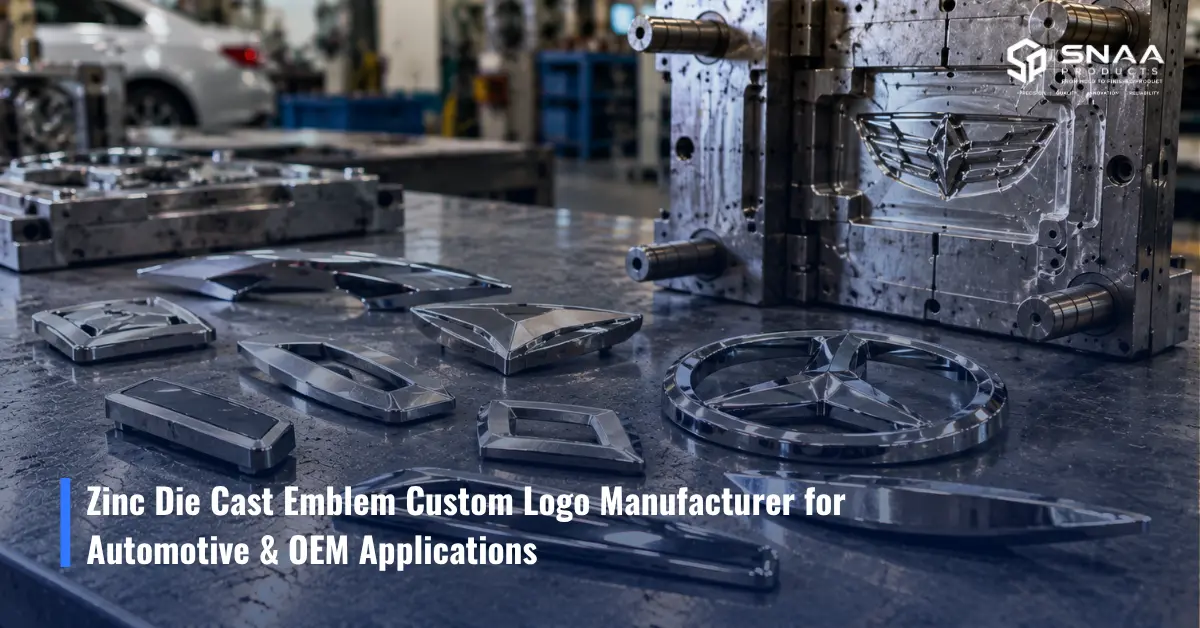
6. Interior and Exterior Hardware
Decorative trim, adjustment mechanisms, seat-related hardware and other visible components can benefit from zinc’s ability to combine detailed geometry with high-quality surface finishing.
Zamak 3 vs Zamak 5 for Automotive Applications
Choosing the correct alloy is critical when manufacturing automotive zinc die cast parts.
Zamak 3
Zamak 3 is known for excellent castability, dimensional stability and surface quality. It is particularly attractive where intricate geometry and finishing performance are important.
Zamak 5
Zamak 5 contains more copper than Zamak 3 and provides higher strength and hardness, with somewhat lower ductility. It can therefore be considered for automotive zinc die cast parts exposed to greater mechanical loads, provided its properties meet the application’s requirements.
The decision should not simply be based on which alloy is more popular.
Engineers should evaluate:
- Mechanical loading
- Wear requirements
- Required hardness
- Part geometry
- Dimensional requirements
- Surface finish
- Operating environment
- Machining requirements
SNAA Products manufactures custom zinc components using Zamak 3 and Zamak 5, based on customer drawings, CAD data, samples and technical specifications.
Design Comes Before Casting
One of the biggest mistakes when developing automotive zinc die cast parts is treating die casting as something that begins only after the design is complete.
The part should be designed around the manufacturing process from the beginning.
Important considerations include:
- Wall thickness
- Draft angles
- Fillets and radii
- Parting lines
- Gate locations
- Ejector locations
- Machining allowances
- Critical dimensions
- Functional datums
NADCA recommends uniform wall thickness, sufficient draft and appropriate fillets/radii when designing die-cast components.
For example, if a bearing seat, threaded hole or assembly interface requires a particularly tight tolerance, it may be better to define that surface for post-casting machining instead of expecting the raw casting to achieve the final dimension.
This design-for-manufacturing approach can make automotive zinc die cast parts easier to produce consistently and can reduce tooling modifications later.
Tooling Is a Production Asset
For high-volume automotive zinc die cast parts, the mould should be treated as a long-term production asset rather than simply a one-time tooling expense.
The die influences:
- Metal flow
- Filling behaviour
- Cooling
- Ejection
- Parting-line quality
- Cycle stability
- Dimensional repeatability
NADCA highlights the ability of zinc tooling to support very high production volumes and millions of parts before tooling replacement is required under suitable conditions.
SNAA Products has an in-house tool room for mould development and maintenance, allowing tooling and casting considerations to be coordinated within the manufacturing workflow.
For OEM programs, this can be particularly useful because tooling decisions made during development can directly influence the consistency and cost of the final component.
Casting Is Not the End of Manufacturing
OEM buyers rarely need an unfinished casting sitting on a pallet.
They need a component that can move into assembly.
That is why automotive zinc die cast parts may require secondary processes such as:
- Drilling
- Tapping
- Thread cutting
- Turning
- Pitch-control machining
- Polishing
- Buffing
- Plating
- Powder coating
SNAA Products provides post-production operations including drilling, tapping, outer and inner thread cutting, turning and pitch-control machining. Its finishing capabilities include chrome electroplating, nickel plating, powder coating, PVD gold, zinc plating, shot blasting, sand blasting and vibratory finishing.
For procurement teams sourcing automotive zinc die cast parts, having casting, machining and finishing capabilities connected under one manufacturing workflow can reduce supplier handoffs and simplify production coordination.
Quality Control for Automotive Zinc Die Cast Parts
Quality should not begin with final inspection.
For automotive zinc die cast parts, quality control should cover the entire production chain, beginning with incoming material and continuing through casting, machining and finishing.
A practical quality system may include:
- Incoming alloy verification
- Process inspection
- Dimensional inspection
- Pre-finishing inspection
- Machining verification
- Final inspection
- Surface-finish inspection
SNAA Products states that its inspection process includes incoming alloy-composition checks, in-process dimensional inspection, pre-finishing inspection and final inspection.
The inspection plan should also be connected to the customer’s drawing and critical-to-function dimensions.
A generic inspection checklist is rarely enough for automotive components.
How Should OEMs Evaluate a Zinc Die Casting Supplier?
When sourcing automotive zinc die cast parts, procurement and engineering teams should look beyond the quoted casting price.
Ask the supplier:
- Can you manufacture or manage the tooling?
- Which zinc grades do you offer?
- Can you work from 2D drawings and CAD files?
- Can you develop parts from physical samples?
- What dimensional inspection methods are available?
- Which machining operations can be performed?
- What surface finishes can you provide?
- How is alloy composition controlled?
- What are tooling and production lead times?
- Can you support repeat production volumes?
- Can you provide finished, assembly-ready components?
These questions help distinguish an actual manufacturing partner from a supplier that only provides basic casting.
Why Choose SNAA Products for Automotive Zinc Components?
SNAA Products has been manufacturing zinc die cast components since 1996 and operates from Bawana, Delhi. The company is ISO 9001:2015 certified and provides custom OEM manufacturing, tooling, Zamak 3 and Zamak 5 casting, machining and multiple finishing options.
Its product portfolio specifically includes automotive components alongside electrical, telecom, hardware, healthcare, sanitary, furniture and industrial applications.
For buyers sourcing automotive zinc die cast parts across Delhi NCR and India, this combination of tooling, casting, machining and finishing can simplify the manufacturing chain.
The key consideration, however, should remain application fit: the alloy, tooling, design, process controls and finishing method should all be selected around the actual component requirements.
Conclusion
The best automotive zinc die cast parts are not created simply by injecting zinc into a mould. They result from the interaction of part design, alloy selection, tooling, casting control, machining, finishing and inspection.
For compact automotive components where complex geometry, dimensional repeatability, surface quality and production efficiency matter, zinc can be an effective manufacturing solution.
For OEMs and Tier suppliers, the right sourcing decision should therefore focus on the complete manufacturing capability rather than the lowest per-piece casting price.
A supplier capable of taking a component from drawing → tooling → casting → machining → finishing → inspection can provide a considerably more streamlined route to production.
FAQ
1. What are automotive zinc die cast parts used for?
Automotive zinc die cast parts are used for selected handles, brackets, levers, housings, locks, latches, fittings, electrical housings and other compact automotive components.
2. Is Zamak 3 or Zamak 5 better for automotive parts?
It depends on the application. Zamak 3 offers excellent castability and surface quality, while Zamak 5 provides higher strength and hardness. The required mechanical and dimensional properties should determine the alloy.
3. Can automotive zinc die cast parts be machined?
Yes. Automotive zinc die cast parts can undergo drilling, tapping, turning, thread cutting and other secondary machining operations where tighter functional dimensions are required.
4. Can zinc automotive components be plated?
Yes. Zinc has excellent finishing compatibility and can be chrome plated, nickel plated and treated with several other surface-finishing processes depending on the application.
5. Can SNAA Products manufacture custom automotive components?
Yes. SNAA Products manufactures custom zinc components according to customer drawings, CAD files, samples and technical specifications, with tooling, casting, machining and finishing capabilities.