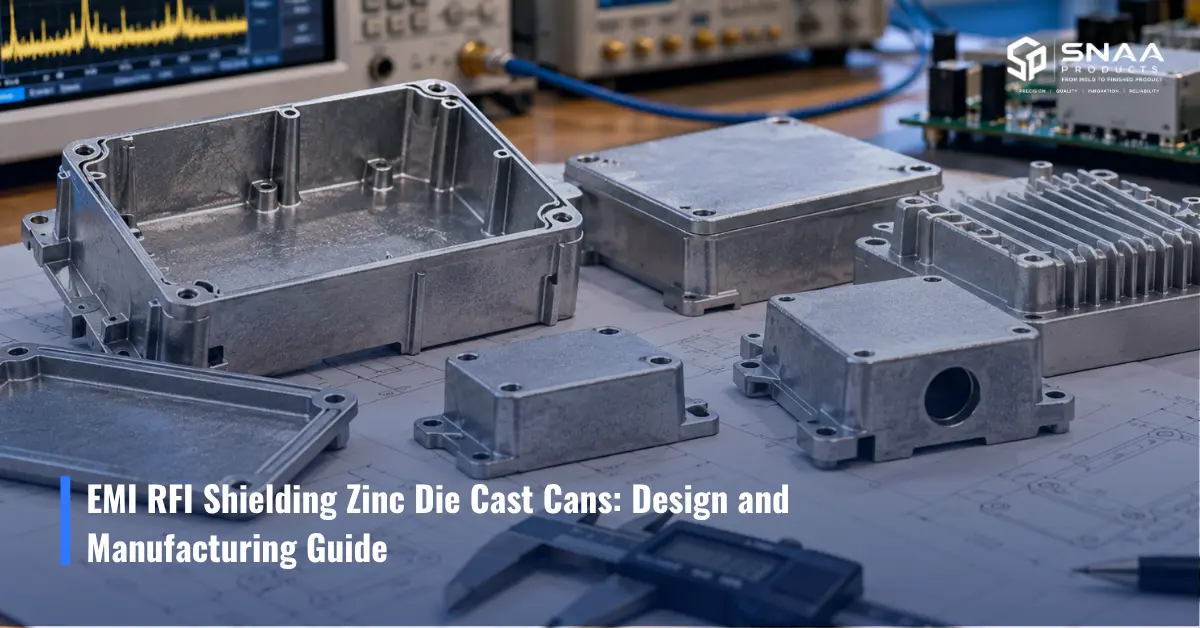
Electronic equipment can be affected by electromagnetic interference (EMI) and radio frequency interference (RFI). These disturbances may affect signal integrity, communication reliability and sensitive circuit performance. For OEMs developing telecommunications equipment, industrial controls and electronic enclosures, EMI RFI shielding zinc die cast cans can be an option for creating a conductive barrier around selected components.
The right solution depends on operating frequency, enclosure design, electrical contact, openings and grounding. In this context, EMI RFI shielding zinc die cast cans should be specified against measurable performance requirements, not simply by material name. This guide explains the design and manufacturing checks buyers should consider before approving a custom component.
What Are EMI RFI Shielding Zinc Die Cast Cans?
EMI describes unwanted electromagnetic energy that disrupts equipment, while RFI refers to interference in radio-frequency ranges. Shielding components help contain emissions from a device or reduce interference reaching sensitive circuitry.
The term EMI RFI shielding zinc die cast cans can describe custom die-cast covers, partitions or enclosures used in electronic assemblies. These should not automatically be confused with thin, stamped PCB shield cans. Both serve shielding purposes, but their construction, tooling, geometry and assembly requirements can differ.
Before specifying a component, define the interference source, the frequency range, the available space and the required shielding performance. Engineers should confirm that the selected EMI RFI shielding zinc die cast cans address the actual interference path.
Why Consider Zinc Die Casting?
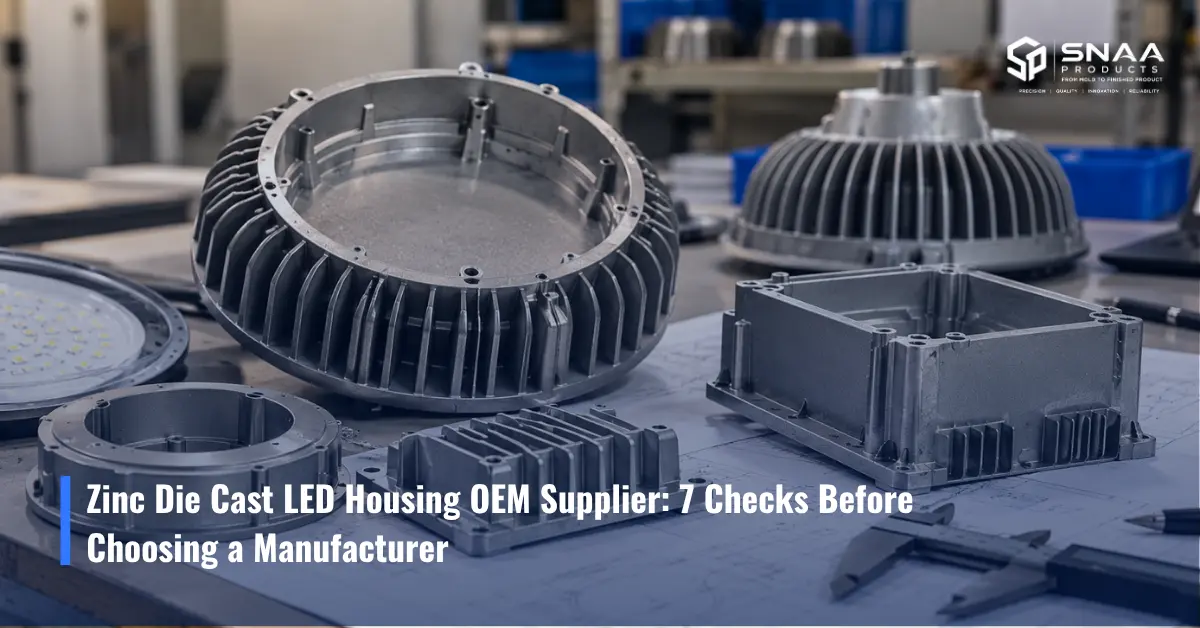
Zinc alloys offer electrical conductivity, strength, dimensional accuracy and the ability to form complex geometries. Die casting can incorporate ribs, mounting bosses and internal partitions into a component, potentially reducing separate parts and assembly steps. For suitable projects, EMI RFI shielding zinc die cast cans may combine shielding and structural functions within one housing.
Potential advantages include:
- Complex geometry: Integrated mounting features and partitions can be incorporated into the design.
- Dimensional consistency: Well-maintained tooling supports repeatable production.
- Post-production options: Machining and surface finishing can help meet assembly requirements.
- Production suitability: Die casting can be economical when tooling investment is justified by expected volumes.
Material selection still requires engineering review. Zinc is not automatically the best choice for every enclosure, and final shielding performance must be validated in the intended assembly.
7 Checks Before Ordering EMI RFI Shielding Zinc Die Cast Cans
1. Define the Shielding Target
Start with the source of interference, the circuit being protected and the frequency range of concern. Specify a measurable shielding effectiveness target and the test method wherever possible.
When reviewing EMI RFI shielding zinc die cast cans, ask the engineering team to define acceptance criteria before tooling starts. Avoid relying on general descriptions such as “high shielding” without a frequency range, test setup or measurable target.
2. Confirm Alloy Suitability
The selected alloy should meet mechanical, dimensional, environmental and electrical requirements. SNAA Products lists Zamak 3 and Zamak 5 among the zinc alloys used for its custom die-cast components.
The suitable grade for EMI RFI shielding zinc die cast cans must be confirmed against the design, operating temperature and customer specification. If weight, heat exposure or other constraints are critical, compare alternative materials before making a final decision.
3. Review Geometry and Tooling
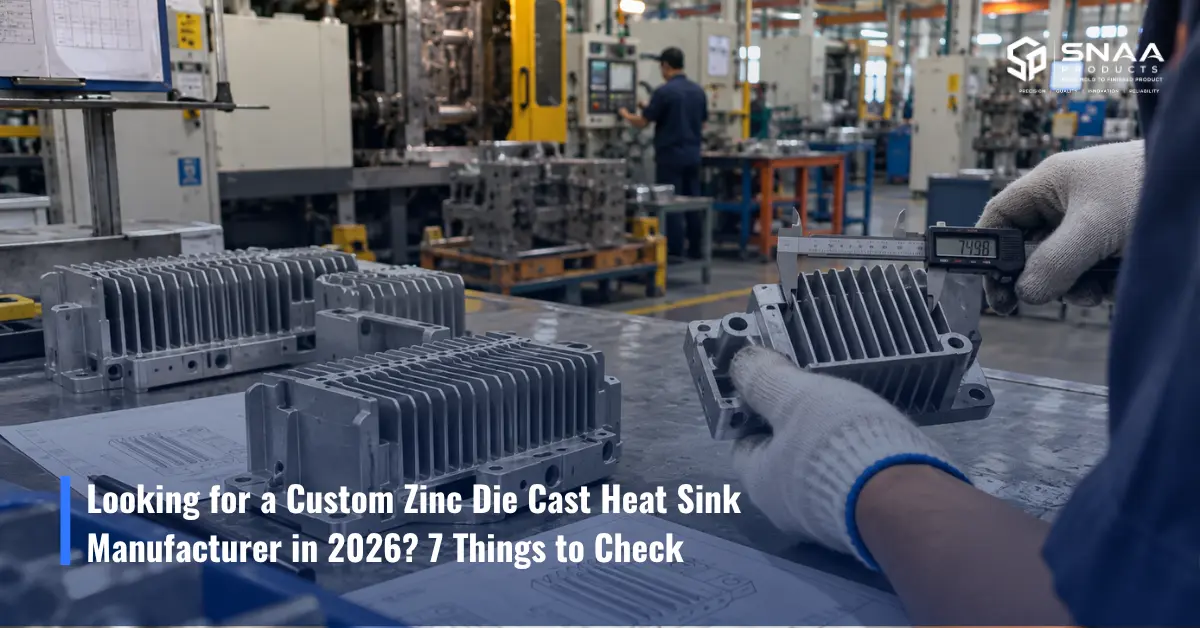
Wall thickness, ribs, draft angles, openings and internal partitions affect manufacturability and fit. A drawing or CAD review can identify features that may complicate casting, ejection or secondary machining.
SNAA Products has an in-house tool room for mould and die development. For custom EMI RFI shielding zinc die cast cans, discuss tool life, sample approval, revision costs and maintenance responsibilities before approving production tooling.
4. Control Seams, Openings and Grounding
Gaps, poorly fitted covers and inconsistent electrical contact can weaken shielding. Cable entries, ventilation openings, fasteners and mating surfaces should be included in the design review.
Define grounding points and specify conductive gaskets or contact surfaces where required. EMI RFI shielding zinc die cast cans should be evaluated as part of the complete enclosure, because assembly details can have a significant effect on performance.
5. Specify Critical Dimensions and Inspection
Mounting holes, mating faces, threads and contact areas may be critical to assembly and electrical continuity. Put tolerances and acceptance criteria on the approved drawing.
SNAA Products describes a quality process covering incoming alloy checks, in-process dimensional inspection, pre-finishing inspection and final inspection. For EMI RFI shielding zinc die cast cans, ask which dimensions will be measured, how results will be recorded and how non-conforming parts will be handled.
6. Choose the Surface Finish Carefully
Finishes can support corrosion protection and appearance, but coatings may affect electrical contact at seams or grounding points. Identify areas that must remain conductive and surfaces that may be coated.
SNAA Products lists options including nickel plating, chrome electroplating, powder coating and liquid painting. Confirm that the selected finish suits the application and does not compromise the required electrical interface on EMI RFI shielding zinc die cast cans.
7. Validate the Final Assembly
A first article that fits correctly does not automatically prove shielding performance. Test the assembled product against the agreed frequency range, test method and acceptance limits.
Depending on the application, checks may include shielding effectiveness, electrical continuity, dimensional inspection and system-level electromagnetic compatibility testing. Approve EMI RFI shielding zinc die cast cans for volume production only after the required design and performance checks have been documented.
Why Consider SNAA Products for Custom Shielding Components?
SNAA Products has manufactured zinc die-cast components since 1996 and operates from Bawana, Delhi NCR. Its published capabilities include in-house tooling, pressure die casting, machining and multiple surface finishing options. The company also lists electrical and telecommunication components among the industries it serves.
These capabilities may be relevant to buyers exploring custom EMI RFI shielding zinc die cast cans or related electronic housings. However, the exact shielding design, tooling feasibility, testing requirements and production capacity should be confirmed directly with SNAA Products before an order is placed.
To request a technical review, share a 2D drawing or 3D CAD file, alloy requirements, critical dimensions, finish, target quantity and operating conditions. Include the intended frequency range and required test standard if available.
Quotation Checklist for EMI RFI Shielding Zinc Die Cast Cans
A complete enquiry helps a manufacturer evaluate the scope and cost of EMI RFI shielding zinc die cast cans. Include:
- Engineering drawing, CAD file or approved sample.
- Material and surface finish requirements.
- Critical dimensions and tolerances.
- Required shielding performance and test method.
- Prototype quantity, production batch size and annual demand.
- Inspection documentation, packaging and delivery expectations.
Compare quotations against the same technical specification. Tooling, machining, finishing, inspection and testing should be identified clearly so the quoted unit price does not hide additional project costs.
Conclusion
Choosing EMI RFI shielding zinc die cast cans requires a clear shielding target, suitable material, manufacturable geometry, reliable electrical contact and documented validation. Zinc die casting can be useful for selected designs that benefit from complex shapes and integrated mounting features, but the finished assembly must be tested against its actual requirements.
SNAA Products offers established zinc die-casting, tooling, machining and finishing capabilities for custom components. Share your technical specification with its team to confirm whether the proposed EMI RFI shielding zinc die cast cans are suitable for manufacture and what further validation may be required.
Frequently Asked Questions
1. What are EMI RFI shielding zinc die cast cans used for?
EMI RFI shielding zinc die cast cans can help contain electromagnetic emissions or reduce external interference in selected electronic, industrial and communication assemblies. Suitability depends on the design and test results.
2. Does zinc die casting guarantee shielding compliance?
No. Performance depends on material, geometry, seams, openings, grounding, surface contact and frequency. The complete assembly must be tested against defined requirements.
3. Which zinc alloys does SNAA Products use?
SNAA Products lists Zamak 3 and Zamak 5 for custom zinc die-cast components. Confirm the suitable grade for each project against its technical specification.
4. Can SNAA Products review a custom shielding housing?
The company publishes custom zinc die-casting, tooling, machining and finishing capabilities. Send the drawing and performance requirements to confirm project feasibility.
5. What should an RF shielding quotation include?
Provide drawings, material and finish details, tolerances, quantities, operating conditions, the required shielding target and any applicable testing or documentation requirements.