Businesses searching for aluminium casting manufacturers in delhi often need more than a low quotation. They need a supplier that understands engineering drawings, maintains consistent dimensions and delivers components to an agreed schedule. This guide explains how to assess aluminium casting manufacturers in delhi and choose a supplier for industrial requirements.
Why Aluminium Die Casting Is Used
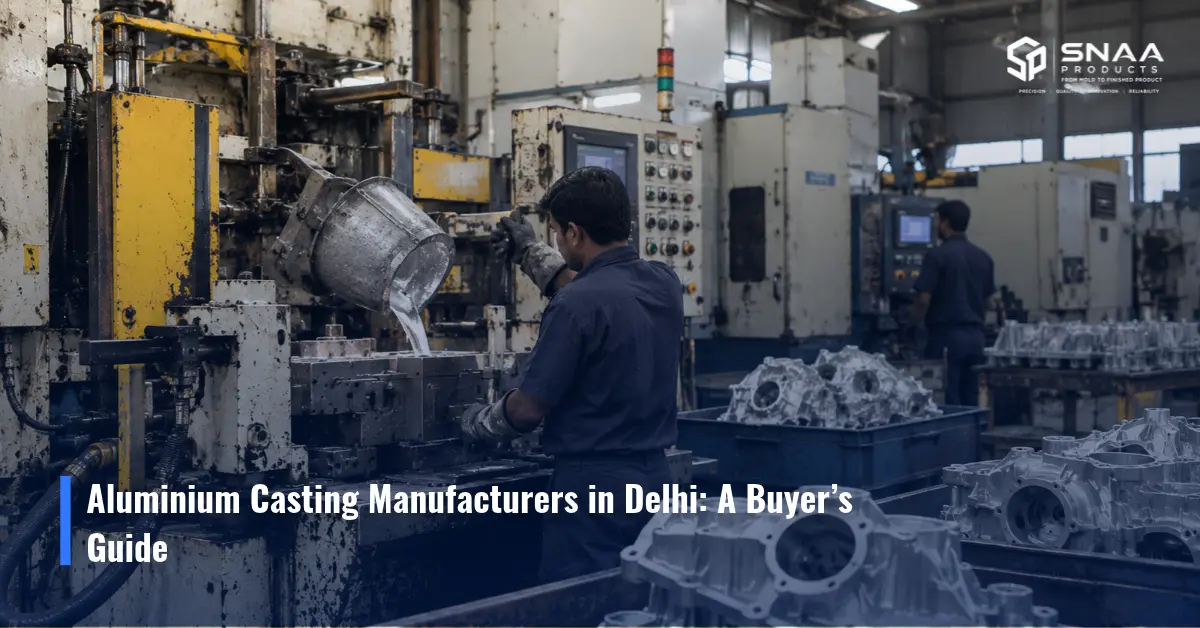
Aluminium is valued for its relatively low weight, useful strength, corrosion resistance and thermal conductivity. High-pressure aluminium die casting injects molten metal into a metal die under pressure to form repeatable shapes. It may suit automotive housings, brackets, electrical enclosures, lighting components, machinery parts and custom OEM components. Aluminium casting manufacturers in delhi should review geometry, operating conditions and production volume before confirming feasibility.
6 Factors to Compare
1. Machine Capacity and Component Size
Machine tonnage is only one part of the assessment. Projected area, wall thickness, geometry, alloy and die design also affect feasibility. Ask aluminium casting manufacturers in delhi about available machine tonnage and the component sizes and weights they can realistically produce.
SNAA Products lists 120-ton and 180-ton aluminium die casting machines. Its published component range is approximately 1 gram to 1.5 kg, subject to design and process requirements. Share a drawing or CAD file to assess whether your part fits these capabilities.
2. Aluminium Alloy Options
Common die casting alloys include A380, A383, A384, A360 and A413. Each has different properties. The right option depends on strength, corrosion resistance, machinability, pressure-tightness and operating temperature. When comparing aluminium casting manufacturers in delhi, explain how the component will be used and identify any material standards. Do not select an alloy only on price; confirm it meets technical requirements.
3. Dimensional Quality and Inspection
Porosity, dimensional variation and surface defects can cause assembly problems or product rejection. Ask about checks during production and before dispatch. Depending on the part, inspection may include visual checks, dimensional measurement, material verification and checks on critical machined features.
Identify critical dimensions on the drawing and agree on acceptance criteria before production. Reliable aluminium casting manufacturers in delhi should discuss inspection requirements against your specifications rather than offer vague assurances.
4. Machining and Surface Finishing
Some cast components need additional operations before assembly. These may include drilling, tapping, threading, turning, deburring, polishing, painting or powder coating. Requirements depend on design, tolerances and intended finish.
Ask aluminium casting manufacturers in delhi which secondary operations they can provide, which may involve external partners, and how the finished part will be checked. Confirm finish, colour, coating requirements and packaging in writing.
5. Production Planning and Lead Times
A delivery plan should account for design review, tooling arrangements, sample approval, production, finishing and inspection. Lead times vary with part complexity, order quantity and project readiness. Ask for separate estimates for initial samples and repeat orders.
Before selecting aluminium casting manufacturers in delhi, discuss expected monthly or annual demand, batch sizes, delivery locations and how design changes will be handled. These details help reduce the risk of unexpected delays.
6. Transparent Quotations
A useful quotation should state material, component price, finishing, machining, inspection, packaging, taxes, delivery terms and any separate tooling-related costs. The lowest initial price may not be the lowest overall cost if necessary operations or quality checks are excluded.
Provide the same technical brief to each of the aluminium casting manufacturers in delhi you compare. This makes quotations easier to assess fairly.
What to Include in Your RFQ
Share as much of the following as possible:
- 2D engineering drawings and 3D CAD files, if available
- Required alloy or operating requirements
- Initial order quantity and estimated recurring demand
- Critical dimensions and tolerances
- Machining and surface finishing specifications
- Quality inspection or testing requirements
- Packaging, dispatch location and target delivery dates
A complete request allows aluminium casting manufacturers in delhi to review the project accurately and identify missing information before quoting. If the design is still developing, say so and ask what further details are needed for a feasibility review.
Aluminium Die Casting at SNAA Products
SNAA Products is based in Bawana, Delhi NCR, and has manufactured metal components since 1996. Its published aluminium die casting capabilities include 120-ton and 180-ton machines and an approximate component weight range of 1 gram to 1.5 kg, depending on design and process conditions.
The company lists A380, A383, A384, A360 and A413 alloys. Depending on project requirements, secondary operations may include trimming, drilling, tapping, threading, turning, deburring and surface finishing. Final feasibility should be confirmed against the drawing, quantity, alloy and finish.
For buyers shortlisting aluminium casting manufacturers in delhi, SNAA Products invites businesses to share drawings, CAD files or samples for a technical discussion. This allows dimensions, finishing, production volume and inspection criteria to be reviewed before a quotation is finalised.
Frequently Asked Questions
What should I check when choosing aluminium casting manufacturers in delhi?
Compare machine capacity, alloy suitability, inspection methods, secondary operations, production planning and quotation details. Ask the supplier to assess your actual drawing.
Which alloys are used for aluminium die casting?
Common options include A380, A383, A384, A360 and A413. Selection depends on the component’s performance and manufacturing requirements.
What component weight can SNAA Products manufacture?
SNAA Products lists an approximate range of 1 gram to 1.5 kg. Actual feasibility depends on geometry, alloy, tooling and process conditions.
Can components be manufactured from CAD files?
Suppliers can review engineering drawings, CAD files or samples to assess feasibility. Final acceptance depends on the design and agreed specifications.
What is needed for a quotation?
Share drawings, material requirements, quantity, tolerances, machining and finishing details, inspection expectations and delivery timelines.
Conclusion
Choosing a supplier requires checking technical fit, quality controls, production planning and total quoted cost, not price alone. Aluminium casting manufacturers in delhi should review component requirements and explain any limitations before confirming feasibility.
SNAA Products provides aluminium die casting capabilities from Bawana, Delhi NCR. Share your component drawing and project requirements to discuss suitability and request a quotation.